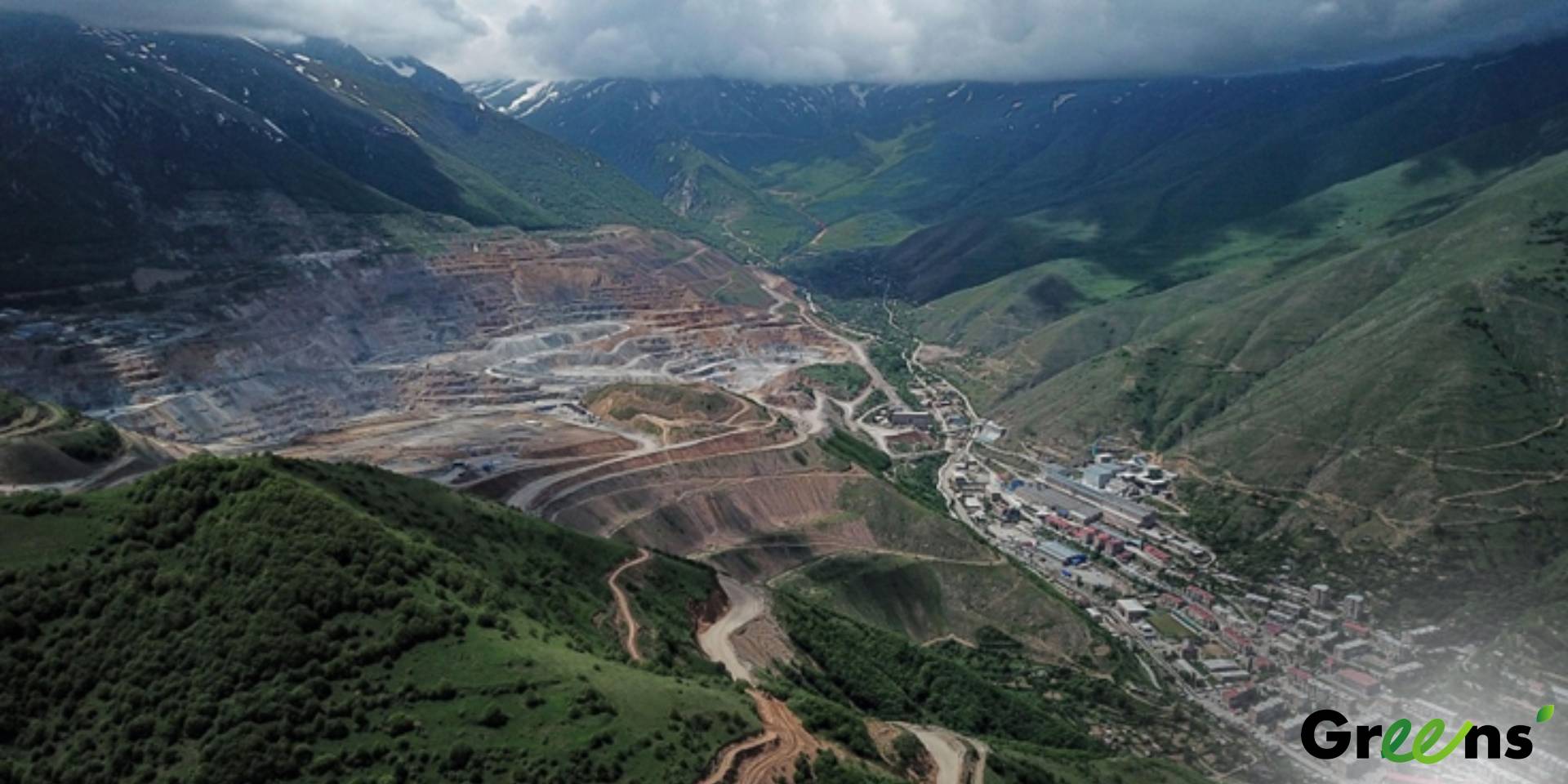
Joint research conducted by the NGOs "EcoLur," "Arnika" (Czech Republic), and the "Community Consolidation and Support Center" (CCMS) has uncovered new data on the environmental and human health damage caused by mining activity in the southern part of Armenia — Syunik region. The results of the study have been published in the report "Beyond Tailings: Environmental Contamination & Human Exposure in Armenia."
The First Systematic Study of Dust and Sediment
For the first time, the study systematically assessed air/dust, river sediment, and soil contamination in the settlements of Kajaran, Kapan, Achanan, Geghanush, Gomaran, Artsvanik, and Syunik, which are located within the zones of influence of the Zangezur Copper-Molybdenum Combine (ZCMC) and the Kapan Ore-Dressing Combine.
Key Findings and Data
- Extremely high copper (Cu) levels: In dust samples taken near the Kajaran open-pit mine and production areas, copper content reached up to 998 mg/kg, and in river sediments — up to 2,314 mg/kg. This exceeds the Canadian Probable Effect Level (PEL) threshold for the protection of aquatic organisms by 11.7 times.
- Hazardous arsenic (As) concentration: In soil samples, arsenic content (23.1 mg/kg) exceeded the established European (Czech) soil decontamination standards by 38 times. In dust samples, arsenic concentration reached 25.4 mg/kg (the highest level recorded in the town of Kapan).
- Prevalence of cadmium (Cd): The highest cadmium concentration in dust was recorded in the Geghanush section, near the base of the Artsvanik tailings dam (3.323 mg/kg), which is 37 times higher than other nearby samples and indicates contamination spreading from the tailings pond by wind.
- Impact of road traffic: In Kajaran, road dust from areas with heavy truck traffic contained 3 times more copper and 3.5 times more cadmium than dust samples taken away from the road.
Health Risks to the Population
Inhaling dust containing heavy metals and their penetration into the food chain pose a serious danger to the population.
- Arsenic and cadmium are classified as carcinogenic substances (lung, bladder, and kidney cancer).
- Lead and mercury cause nervous system disorders and a decline in cognitive and motor functions, especially in children.
- High doses of copper and nickel damage the liver, kidneys, and respiratory system.
Proposed Steps and Solutions
The authors of the report put forward a number of specific recommendations:
At the state level: establish national standards for mining-related dust and sediment contamination, introduce an independent air quality monitoring system, and carry out periodic health screening of residents in affected communities (within a 2 km radius), especially children.
By the companies: install real-time air quality indicators in settlements, and carry out active greening and dust suppression at the tailings ponds (particularly Artsvanik and Geghanush).
Residents are advised to avoid consuming vegetables grown in areas immediately adjacent to the tailings ponds and to carry out frequent wet cleaning of their homes.
Sources: