.jpg)
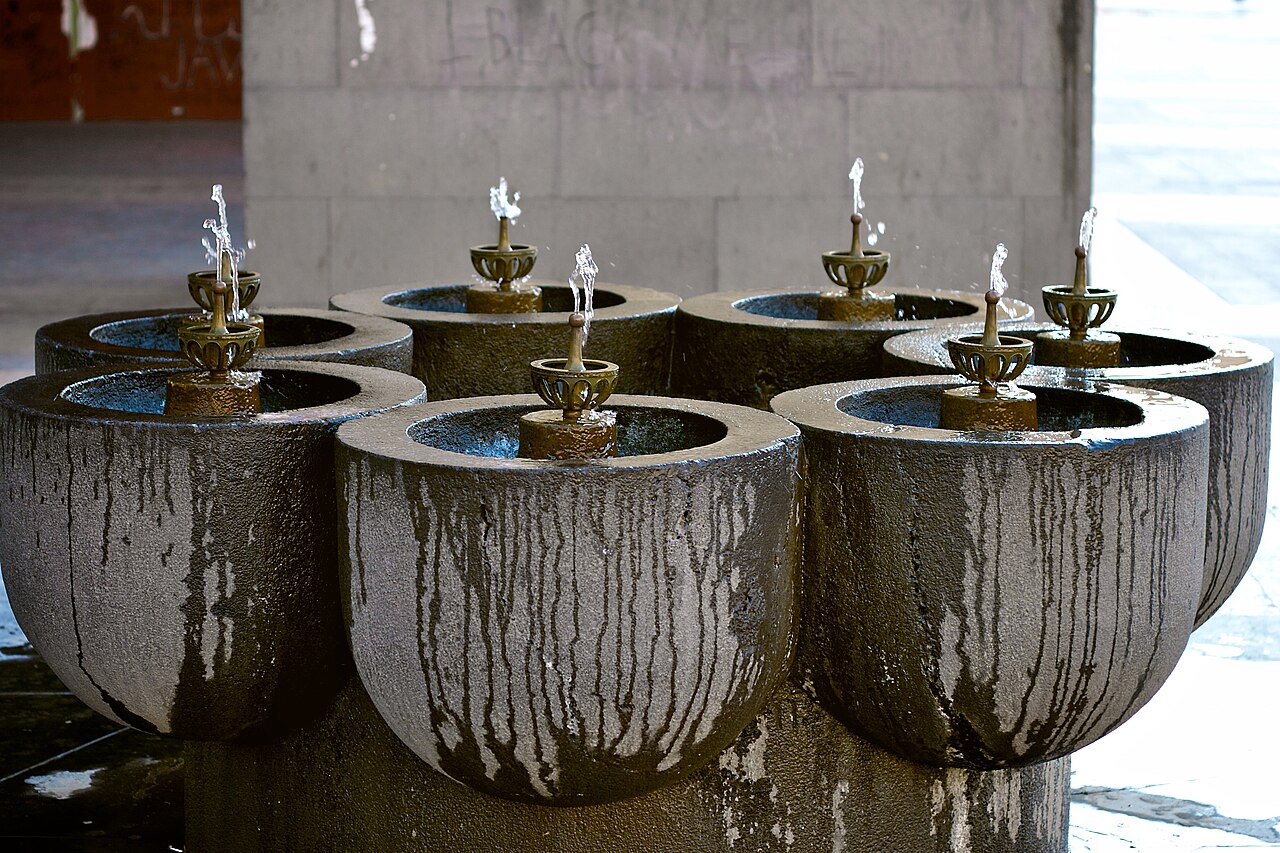
Armenia is often called the “land of stones,” but our true wealth is hidden in the cool springs flowing from between those stones. Water resources are the vital artery of our country, upon which both our health and economic well-being depend.
Armenia’s natural world is endowed with an exceptional advantage: about 96% of our drinking water is sourced from underground springs. Unlike many countries where water is taken from open reservoirs and undergoes complex chemical treatment stages, Armenian mountain springs provide us with naturally filtered, high-quality water. The underground basin of the Ararat Valley—our country’s subterranean “granary”—plays a pivotal role in this system. However, this water abundance is not just a gift; it is a great responsibility.
Armenia’s annual renewable water resources amount to around 10.5 billion $m^3$. To manage these reserves, more than 80 reservoirs have been built, the largest of which, the Akhuryan Reservoir, is of vital importance for agriculture. The numbers speak for themselves: about 70% of our water resources are directed toward irrigation, while the rest is distributed among industry, energy (hydropower plants), and household needs.
Despite these rich reserves, we face serious threats. Global climate change is leading to a decrease in river flows, and the relentless, inefficient use of groundwater (especially for fish farming) threatens to deplete or pollute our natural reserves.
The question arises: how do we preserve this life-giving liquid? To solve these problems, Armenia has adopted a strategy for integrated water resources management. The legislative framework clarifies the following priorities:
- Accurate Accounting: Knowing how much water we have and of what quality, in order to plan the future correctly.
- Setting Priorities: First, ensuring high-quality drinking water for the population, then meeting agricultural needs.
- Basin Management: Water has no administrative boundaries. Management is carried out according to natural water basins, involving local communities and specialists.
Water can no longer be viewed as an inexhaustible resource. Preserving Armenia’s water wealth requires a conscious approach at both the individual and state levels. The introduction of water-saving technologies, the prevention of pollution, and the care of underground basins are not a choice, but the only way to survive. Our task today is to manage water so that tomorrow our generations do not have to pay for our negligence. Remember, every drop saved is a step toward a green and sustainable Armenia.