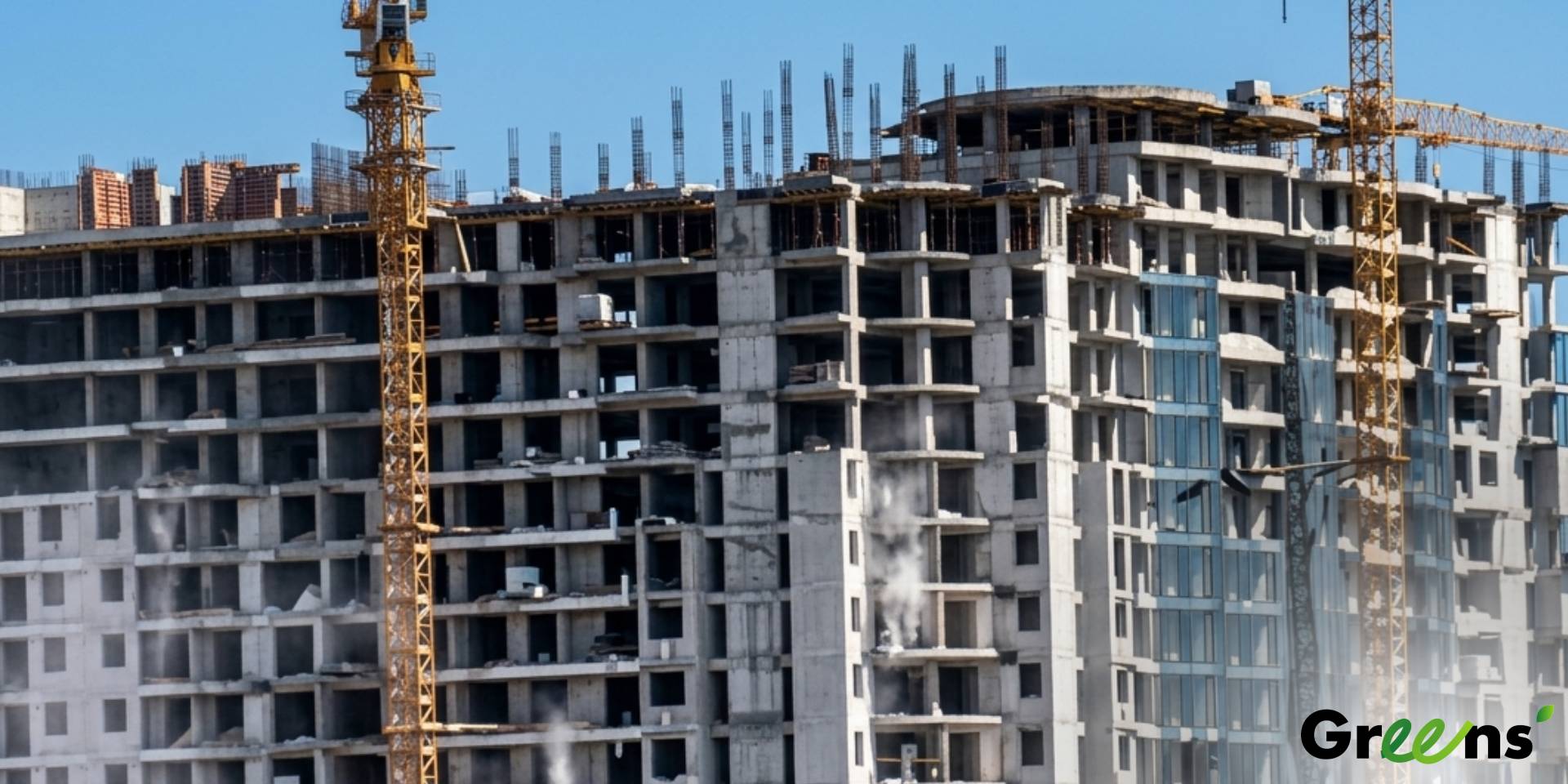
Recent events surrounding construction near the Avan Football Academy highlight how weak legal regulations, economic calculations, and bureaucratic inertia endanger public health.
Chronology of Events
- August 6, 2026 – Social media alerts raised concern over clouds of dust rising from an apartment building construction site in Avan operated by "ML Mining."
- August 7, 2026 – The Environmental Protection and Mining Inspection Body (EPMIB) responded by initiating administrative proceedings, issuing a 150,000 AMD fine, and ordering the violations resolved.
- August 23, 2026 – Despite the fine, debris continued to fall from upper floors. At 10:50 AM, citizen Lusine Mkrtchyan filmed dust pouring down "like a waterfall"—directly threatening 5- to 6-year-old children training nearby—and sent the video to the developer.
- September 15, 2026 – Hetq published the investigation "Waterfall of Dust from Unfinished Buildings: The Cost of Polluting the Air." The same day, the Yerevan Municipality conducted a quick inspection and provided photos showing dust-suppression nets and a water cannon installed at the site.
- September 16, 2026 – Environmental Protection and Mining Inspection Body of the Republic of Armenia (EPMIB) issued a clarification, claiming the published video was "nearly a month and a half old" and referred to the August 7 incident, while their September 16 visit showed everything was in order.
- September 16, 2026 – Hetq refuted the inspection body's claim by publishing screenshots proving the video was shot on August 23—two weeks after the original fine.
A Simple Calculation: Why Fines are Worth Paying
The situation in Avan is a matter of simple economic calculation. Until recently, fines for improperly equipping a construction site (lacking water cannons, dust nets, or air quality monitors) amounted to only a few hundred thousand drams.
For a major developer handling multi-million dollar projects, repeatedly paying a 100,000 AMD fine was far cheaper than installing safety systems costing tens of thousands of dollars. The penalty functioned not as a deterrent, but as a "license fee" to pollute.
Failure of Regulatory Oversight
The regulatory response worsens the issue. EPMIB conflating an August 23 citizen video with an August 6 alarm points to institutional inaction.
Rather than admitting the initial fine failed to change developer behavior, the inspectorate distorted the facts. This reflects a administrative system trapped in paper-clearing formalism—prioritizing bureaucracy over clean air—even as Yerevan's geography and climate make construction dust a primary environmental hazard.
In Avan, the risk is elevated: dust clouds fall just 300 meters from the Football Academy, where hundreds of children train under intense physical exertion.
Will the Situation Change?
The story shows that writing laws and raising fines is not enough.
As long as state inspection bodies focus on sanitizing reality and developers view penalties as a minor cost of doing business, citizens and their children will continue breathing construction dust.
Sources:
https://www.hetq.am/hy/article/183939
https://www.ecoinspect.am/hy/post/more/1326
https://hetq.am/hy/article/183969