.jpg)
Air pollution remains one of the greatest environmental and health challenges. According to the World Health Organization (WHO), it causes millions of premature deaths annually. Particularly dangerous are fine particles that penetrate the human respiratory system, leading to respiratory and cardiovascular diseases. Beyond health consequences, air pollution disrupts economic development and contributes to climate change.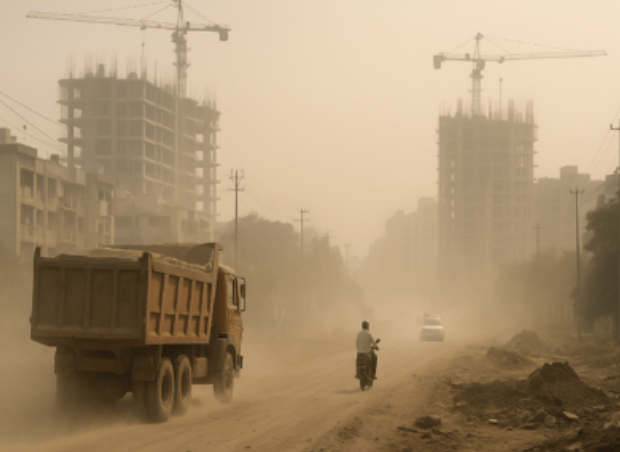
In Yerevan, the issue of air pollution has become particularly acute since 2025, evolving into a primary public health challenge. In recent months, prolonged periods of fog and grey smog have been recorded in the city. This is mainly due to poor air circulation during low temperatures, while the actual sources of pollution are uncontrolled construction emissions and unjustified tree felling. It is a reminder that trees are among the largest natural air filtration systems. Fires at the Nubarashen landfill and improper waste management are also significant sources of pollution in Yerevan. Due to failures in managing this sector, the population of Yerevan is acquiring a “bouquet” of health issues: exacerbation of respiratory diseases, asthma, and allergies, as well as cardiovascular problems and oncological diseases. Furthermore, the residents’ quality of life is deteriorating, and healthcare costs are rising.
According to Armenpress, throughout 2025, the Air Quality Index (AQI) repeatedly crossed the safety thresholds set by the WHO. Levels of fine particulate matter PM2.5 frequently reached dangerous levels, exceeding 150–180 AQI, which is classified as “unhealthy.” Average values for larger particles PM10 were also high, ranging from 60–70 AQI, which also exceeds permissible limits.
Source: https://armenpress.am/en/article/1237034?utm_source=copilot.com