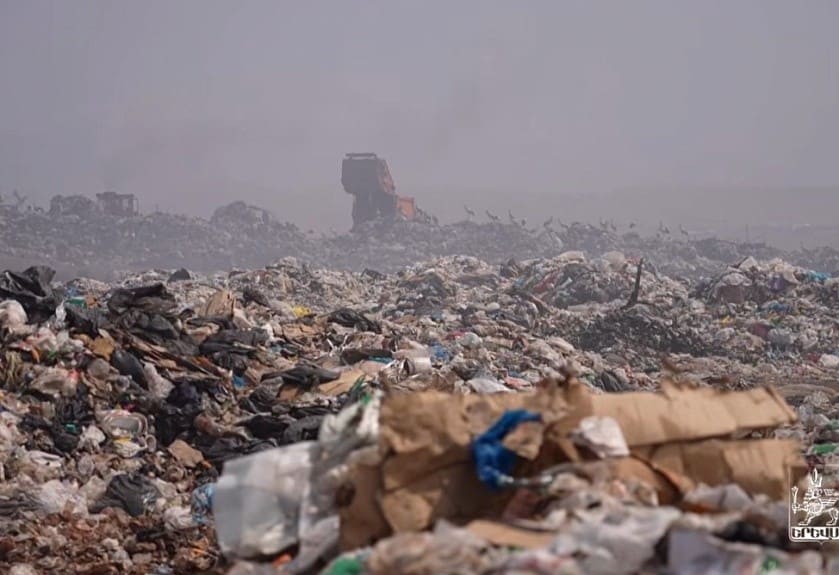
While the world strives for a circular economy, Armenia remains stuck in a waste management crisis that is no longer just an environmental issue, but a consequence of the inaction of state and local authorities. Around 368,000 tons of household waste generated annually, along with enormous volumes of mining waste, continue to accumulate. Of the approximately 60 existing landfills, almost none to this day provide basic sorting or recycling. This is not merely a technical oversight, but a lack of will by responsible structures to control the situation.
At the epicenter of the problem is Yerevan, which accounts for more than 40% of household waste. Despite years of promises and international loan programs, Nubarashen and other landfills remain primitive “garbage heaps.” The absence of sorting systems has become a source of constant air and soil poisoning; methane generated from the decomposition of organic waste is 25 times more dangerous for climate change than CO₂. However, this does not seem to concern the officials whose duty it is to create an investment environment for innovative solutions that could lead to a slight mitigation of the situation.
The situation is even more horrific in the mining areas of Lori and Syunik. As a result of state regulatory bodies “looking the other way,” waste continues to pollute rivers and agricultural lands, endangering public health. Furthermore, the complete lack of infrastructure in rural communities forces residents to resort to spontaneous waste burning, which toxifies the atmosphere.
Nature is paying the price for this administrative paralysis today: the endangerment of fish species in the Sevan basin, the thinning of bird populations in the Ararat valley, and soil degradation are direct consequences of our inaction. To overcome this crisis, international donor programs are no longer enough; clear accountability from those in charge and a drastic change in behavior are required. Armenia must stop viewing waste as an insoluble burden and finally turn it into an economic resource, escaping the “trash trap.”